


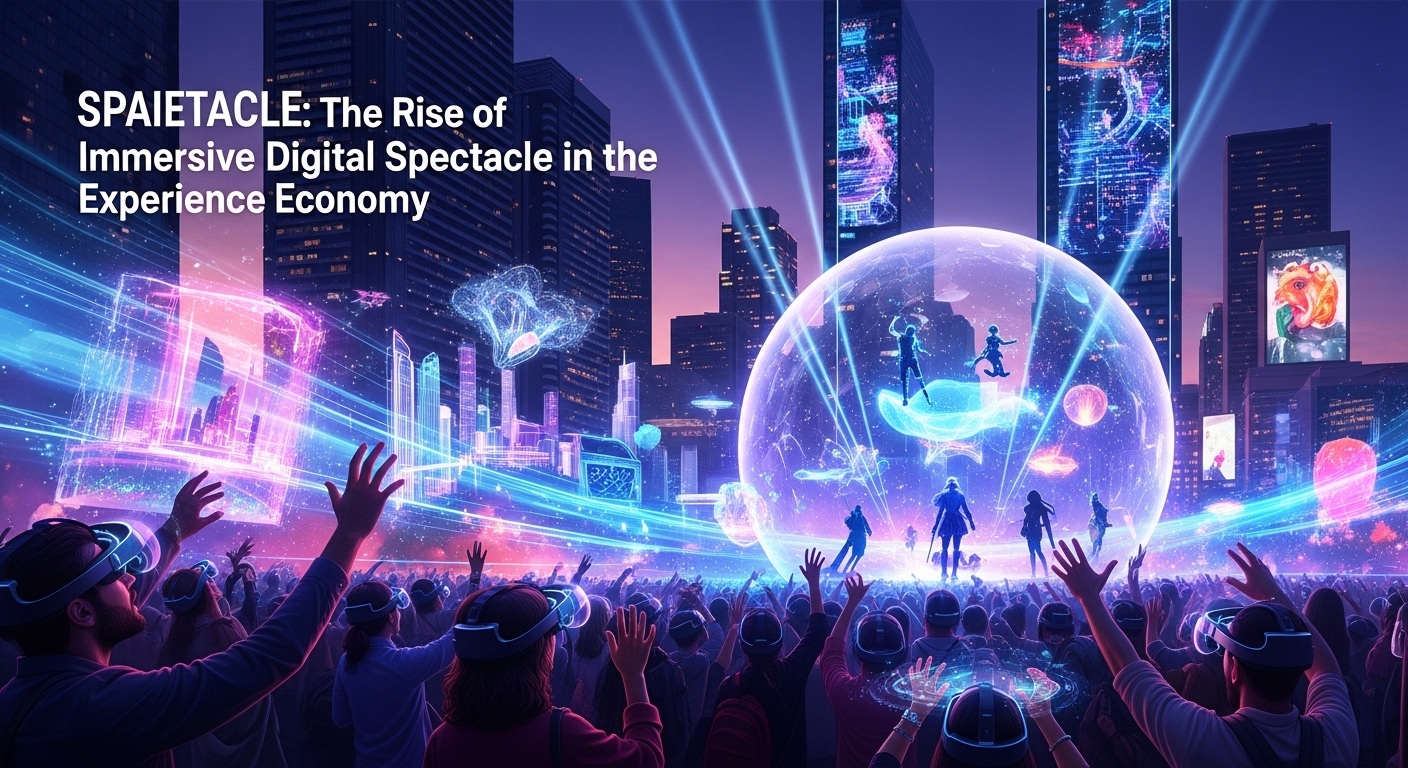
In an age where attention is currency and experience is everything, a new concept is emerging at the intersection of technology, storytelling, and sensory design: Spaietacle. More than just a performance or a display, Spaietacle represents a fully immersive digital spectacle—an orchestrated blend of space, AI, interactivity, and visual drama that transforms passive audiences into active participants.
Spaietacle is not confined to a stage or screen. It unfolds across physical and digital environments, merging augmented reality, spatial computing, live performance, and emotional design. In a world saturated with content, Spaietacle stands out by creating environments people don’t just watch—but step inside.
What Is Spaietacle?
The word “Spaietacle” combines three core ideas:
-
Space – immersive environments, both physical and virtual
-
AI – adaptive intelligence that personalizes experiences
-
Spectacle – grand, visually striking performance
Together, Spaietacle describes a new category of experiential design where technology and artistry converge to create dynamic, interactive worlds.
Unlike traditional events or digital content, Spaietacle evolves in real time. It reacts to audience behavior, adapts to mood and movement, and transforms space into a living narrative canvas.
The Foundations of Spaietacle
Spaietacle is built on four essential pillars:
1. Immersive Environments
Spatial design is at the heart of the experience. Whether through projection mapping, virtual reality, or architectural light installations, space becomes an active participant in storytelling.
2. Adaptive Intelligence
Artificial intelligence personalizes each encounter. Sensors track motion, voice, or biometric signals to shape the unfolding narrative. No two participants experience the same Spaietacle in exactly the same way.
3. Multi-Sensory Design
Visuals alone are not enough. Soundscapes, tactile feedback, temperature shifts, and even scent integration heighten immersion and deepen emotional engagement.
4. Narrative Integration
Every element works toward a cohesive story. Rather than random visual effects, Spaietacle environments are carefully choreographed to guide emotional journeys.
Spaietacle in Entertainment
Entertainment is where Spaietacle thrives most visibly. Traditional concerts, theater productions, and exhibitions are being transformed by immersive design.
Live performances now incorporate:
-
Real-time generative visuals
-
Audience-responsive lighting systems
-
AI-driven musical adaptations
-
Augmented reality overlays
Imagine attending a show where the stage expands beyond physical boundaries, where digital landscapes respond to crowd energy, and where each audience member influences the unfolding spectacle. That is Spaie-tacle in action.
Theme parks, immersive museums, and interactive art exhibitions are also embracing this model. Rather than observing from a distance, visitors walk through living worlds shaped by their presence.
Spaietacle in Brand Experiences
In the experience economy, brands must do more than advertise—they must engage. Spaietacle offers a powerful platform for immersive storytelling that connects emotionally with audiences.
Pop-up activations, digital showrooms, and experiential marketing events are evolving into interactive spaces where:
-
Consumers influence product demonstrations
-
AI tailors environments to user preferences
-
Digital art installations reinforce brand identity
These experiences create lasting impressions far beyond traditional advertising methods.
Educational and Cultural Applications
Spaie-tacle is not limited to entertainment and marketing. Educational institutions and cultural organizations are leveraging immersive technologies to enhance learning.
Imagine stepping into a fully reconstructed ancient city where AI characters respond to your questions. Or exploring a science exhibit where physical simulations change based on your movements.
Spaie-tacle transforms information into lived experience. Learning becomes participatory rather than passive, deepening comprehension and retention.
Museums and cultural spaces use immersive projection and interactive storytelling to make history feel immediate and relevant.
The Psychological Power of Spaietacle
Human brains are wired for immersion. Emotional engagement increases when individuals feel physically and cognitively involved.
Spaietacle taps into:
-
Sensory stimulation
-
Emotional narrative arcs
-
Real-time feedback loops
-
Social participation
These elements create a powerful sense of presence. Participants are not merely observers—they are co-creators of the experience.
This psychological immersion explains why immersive events often leave stronger memories than traditional media.
Technological Drivers Behind Spaietacle
Several advancements make Spaietacle possible:
-
Spatial computing
-
Real-time rendering engines
-
Motion capture and biometric sensors
-
Advanced projection mapping
-
Edge computing for low-latency interaction
-
AI-driven generative design
As hardware becomes more compact and software more intelligent, immersive experiences are becoming more accessible.
Cloud connectivity allows distributed audiences to share synchronized experiences across geographic boundaries. This expands Spaie-tacle beyond physical venues into hybrid and virtual spaces.
Challenges of Creating Spaietacle
While compelling, Spaietacle demands careful orchestration. Challenges include:
-
High production costs
-
Complex technical integration
-
Data privacy considerations
-
Accessibility concerns
-
Maintaining narrative cohesion amid interactivity
Designers must balance spectacle with substance. Without thoughtful storytelling, immersive environments risk becoming visually impressive but emotionally shallow.
Successful Spaie-tacle experiences require collaboration between technologists, artists, psychologists, and storytellers.
The Future of Spaietacle
As augmented reality glasses, haptic wearables, and AI systems become mainstream, Spaie-tacle will likely evolve into everyday life.
Future possibilities include:
-
Immersive remote collaboration environments
-
Personalized urban installations
-
Interactive public art responding to community data
-
Adaptive home entertainment ecosystems
The boundaries between digital and physical will continue to blur. Everyday spaces—offices, classrooms, city squares—could transform into responsive storytelling environments.
Spaietacle may redefine how societies gather, celebrate, learn, and connect.
Why Spaietacle Matters Now
In an era of information overload, attention is scarce. Static content struggles to captivate audiences accustomed to interactive platforms.
Spaietacle addresses this challenge by offering depth instead of distraction. It transforms moments into experiences and audiences into participants.
More importantly, it reflects a shift in cultural expectations. People no longer want to watch stories unfold—they want to step inside them.
Conclusion
Spaietacle represents the next frontier of immersive experience. By blending space, artificial intelligence, and spectacle into cohesive, adaptive environments, it reimagines how we engage with art, entertainment, education, and brands.
It is not merely about technology—it is about transformation. Transformation of space into narrative, of audiences into collaborators, and of events into unforgettable journeys.
As innovation continues to accelerate, Spaietacle stands poised to shape the future of human experience—where immersion becomes the norm, and spectacle becomes participatory.